Author: Matthew Fleming

  • Keio University | U.S.-Japan-ROK Trilateralism from Obama to Biden: Expanding on Theoretical Norms of Understanding through Aspects of Building Trilateralism and U.S. Involvement in Japan-Korea Conflict Issues

    Keio University | U.S.-Japan-ROK Trilateralism from Obama to Biden: Expanding on Theoretical Norms of Understanding through Aspects of Building Trilateralism and U.S. Involvement in Japan-Korea Conflict Issues

    Structured Abstract

    Purpose – This research analyzes the validity of the Biden administration period’s cooperation as a deviant case within the quasi-alliance model’s expectations for the period while exploring the compounding impact of building trilateralism in the U.S.-Japan-ROK relationship and U.S. involvement in Japan-Korea conflict issues.

    Design – This research conducts an embedded multiple-case study design, exploring two cases with two embedded units of analysis each. The first case operates within the past quasi-alliance application by researchers in the Obama and Trump periods, applying a constructed structured framework of analysis on the building trilateralism and the United States’ involvement in defining conflict issues of the 2015 Obama-era ‘comfort women’ agreement and the 2019 Trump-era GSOMIA conflict. The second case analyzes the U.S. commitment to security made by the Biden administration through an aspect of the quasi-alliance model and applies the structured framework of analysis on the building trilateralism and U.S. involvement in the 2023 Biden-era forced labor compensation plan.

    Findings – The research findings contribute to the understanding that articulating the United States’ involvement in Japan-Korea conflict issues as pressure is well-founded and that the impact of that pressure within the alliance system is multidirectional. Additionally, this research argues the importance of the compounding factor of the building trilateralism, as it impacts susceptibility to pressure over time and the accessibility for further progression through using past agreement foundations. Moreover, these research findings support the interpretation of the Biden administration period’s cooperation as a deviant case within the quasi-alliance model’s expectations for the period and discuss the future applicability of the model for the U.S.-Japan-ROK case. Specifically, the analysis’s findings elaborate on the past concerns for the model in the post-Cold War era and propose the additional difficulties it will face as the effort to build trilateralism continues to move the relationship between a quasi-alliance and alliance theory interpretation.

    Value – This research expands on gaps in security studies’ theoretical frameworks, deepens understanding of a unique aspect of alliance management, produces observations on the United States’ involvement in a critical relationship, and supports the benefit that aspects of building trilateralism and pressure in the alliance system hold in supplementary analysis.

    To Read the Full Thesis: (Click Here)

  • President Yoon Suk Yeol of the Republic of Korea’s “The Future Generations of Korea and Japan” Lecture | 韓日未来世代講演会-尹錫悦大統領、学生と未来を語る | 한일 미래세대 강연회

    President Yoon Suk Yeol of the Republic of Korea’s “The Future Generations of Korea and Japan” Lecture | 韓日未来世代講演会-尹錫悦大統領、学生と未来を語る | 한일 미래세대 강연회

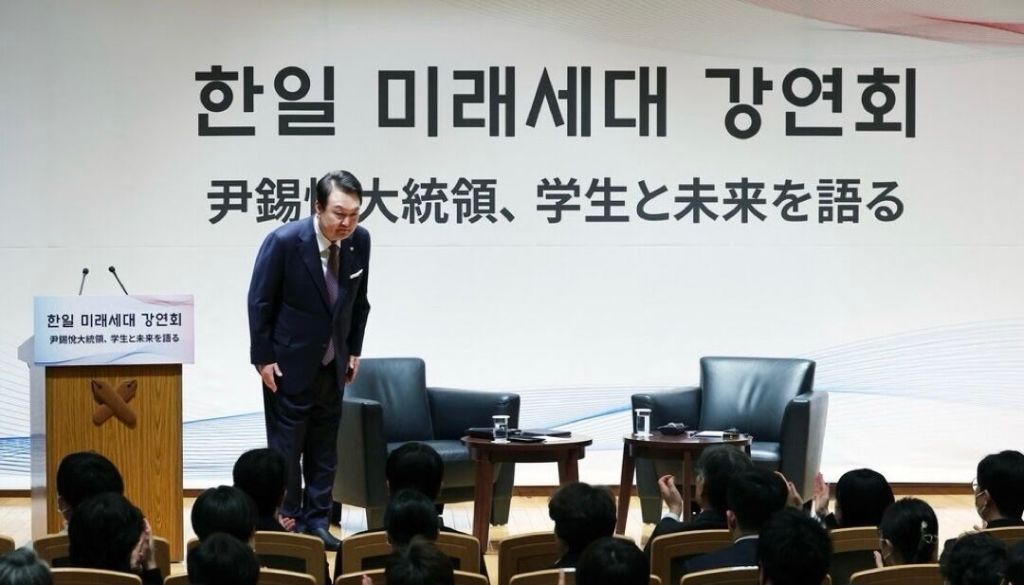
    As a U.S.-Japan-ROK relations researcher and dual-degree master’s student at Yonsei University and Keio University, I had the privilege of attending the lecture titled “The Future Generation of Korea and Japan” by the President of the Republic of Korea, Yoon Suk Yeol, at Keio University earlier this year. His visit, marked by a summit with Prime Minister Fumio Kishida, emphasized the commitment to improving bilateral relations between South Korea and Japan.

    An unexpected moment arose when I had the opportunity to exchange a few words with President Yoon and shake his hand as he left the lecture hall. It was a meaningful experience, highlighting the importance of diplomatic engagement and dialogue.

  • North Korean Review | Review of The North Korean Conundrum: Balancing Human Rights and Nuclear Security, by Robert R. King and Gi-Wook Shin, North Korean Review 18, no. 2

    North Korean Review | Review of The North Korean Conundrum: Balancing Human Rights and Nuclear Security, by Robert R. King and Gi-Wook Shin, North Korean Review 18, no. 2

    The Covid-19 Pandemic has only exacerbated the long-standing issues afflicting the insufficiencies in human rights protections around the world while furthering the degradation of human rights across areas of autonomy and accessibility. In the case of the long history of human rights violations and reluctance to meet the international standards upheld by the United Nations, the Democratic People’s Republic of Korea (DPRK/North Korea) must be viewed as an exceedingly critical case of concern, especially in recent times. From June 16 to 18, 2020, Stanford University’s Asia-Pacific Research Center (APARC), in partnership with the Koret Foundation, organized its annual Koret Conference with a specific focus centered on North Korean human rights. In a volume of conference proceedings organized into parts based on three interrelated issues of the role of the United Nations, the role of information, and that of denuclearization, The North Korean Conundrum: Balancing Human Rights and Nuclear Security (2021) adds to the conversation on the role human rights in policy towards North Korea, while emphasizing the interconnectedness of human rights with political issues such as the addressment of issues of security and denuclearization. Espousing a desire to not “delegitimize” the regime but rather “help North Korea move towards becoming a positive and contributing participant in the international community” (p. 22), editors Robert R. King and Gi-Wook Shin strive to “reignite” the importance of a broad engagement with the DPRK on human rights issues, as they deem the stereotypical notions of such efforts as negatively impactful to denuclearization efforts and security issues as false (p. 42).

    To Read the Full Review: (Click Here)

  • Master’s Degree Graduation: Yonsei University | 연세대학교

    Master’s Degree Graduation: Yonsei University | 연세대학교

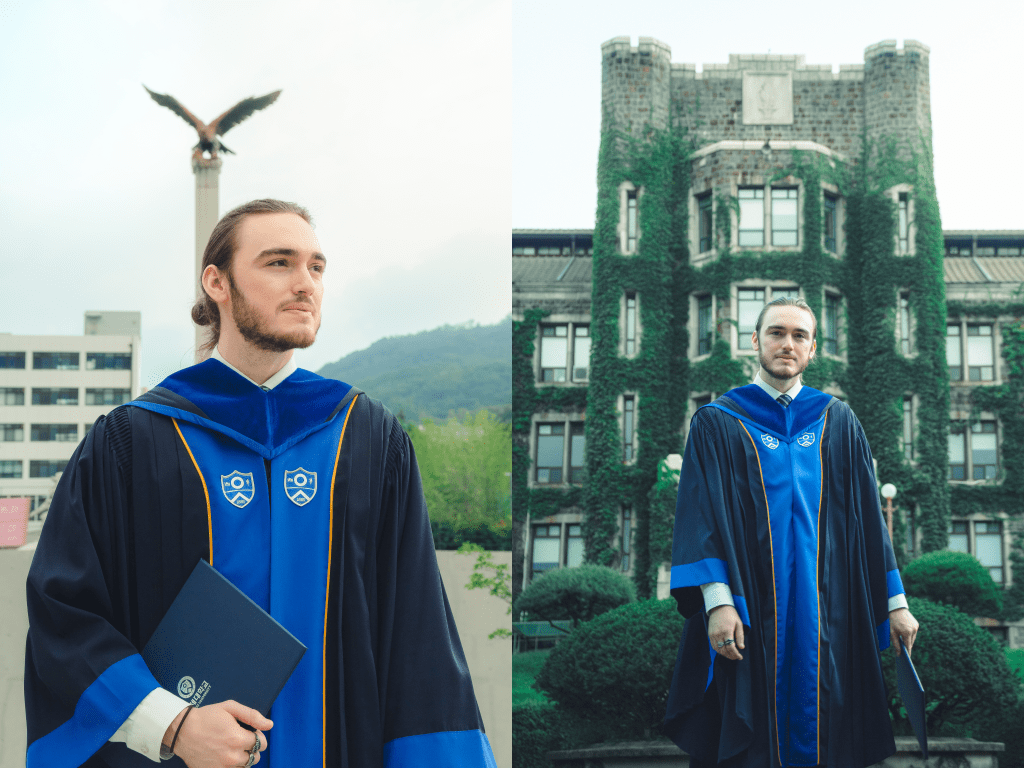
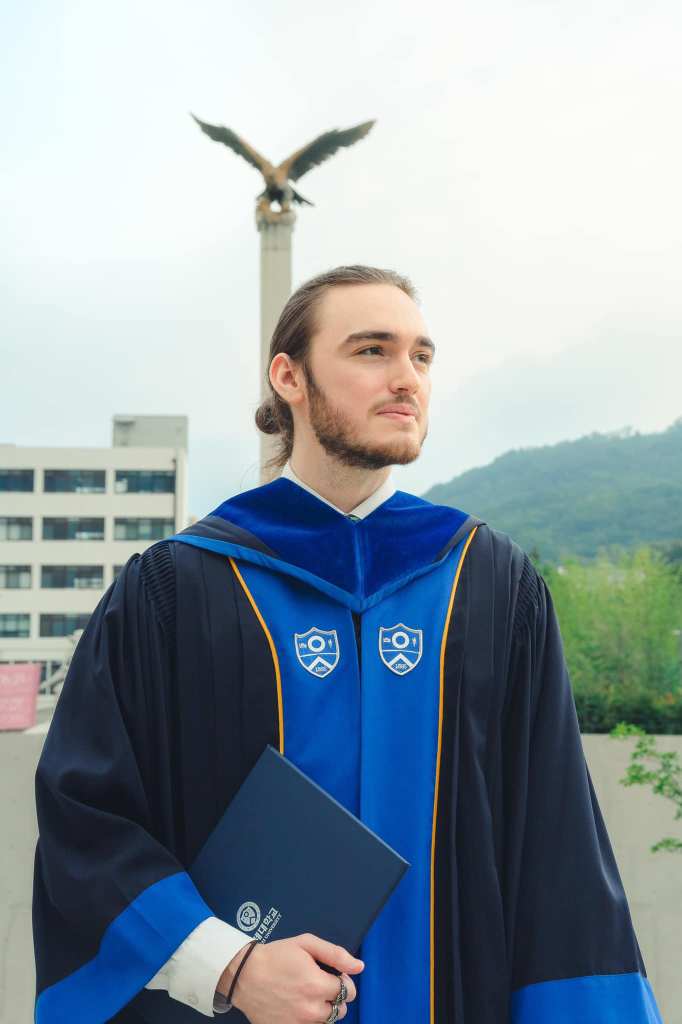
    This week, I graduated from Yonsei University Graduate School of International Studies.

    Over the last two years in Korea, while obtaining a Master of Global Affairs and Policy with a dual concentration in International Security & Foreign Policy and International Law & Organizations, I additionally …

    • Was selected to be a Dual-Degree Representative between Yonsei University and Keio University in Tokyo, Japan.
    • Worked as a Think Tank Research Intern at the renowned East Asia Institute 동아시아 연구원(EAI).
    • Continue to work as an Academic Journal Intern at the indexed Journals of North Korean Review and Journal of Territorial and Maritime Studies (JTMS).
    • Published a book review and independent research with academic journals, [i.e., “Review of The North Korean Conundrum: Balancing Human Rights and Nuclear Security, by King, Robert R., and Gi-Wook Shin,” Fleming, M. (Forthcoming, 2022), North Korean Review, 18 (2), and “The Japanese Government and Immigration: A Duality of Policy in Media and Governmental Documents,” Fleming, M. (2021), Yonsei Journal of International Studies, 13 (1), pp. 72–83.]
    • Published with Global Affairs Magazines, Academic Blogs, and Journals’ web-based extensions, with nine articles in Yonsei University’s Global Affairs Magazine NOVAsia, and research and interviews with the North Korean Review Blog and the Journal of Territorial and Maritime Studies Online.
    • Participated as a panelist at the 2022 Korea Political Science Association’s Summer Conference, presenting research titled “Denuclearization In DPRK Post-Russian Invasion Into Ukraine: Conversation On The Value Of Security Assurances And Nuclear Deterrence.”
    • Was invited to participate as part of the online audience for the 10th Annual Seoul Defense Dialogue, a high-level multilateral security dialogue for global security issues by the Ministry of National Defense, Republic of Korea.

    My time in Seoul has changed my trajectory in a way I could have never predicted. I am incredibly grateful for the opportunities and support Yonsei University has presented me with, and I look forward to what the future might hold.

  • 2022 Korea Political Science Association Summer Conference: “Contemporary Perspectives On North Korea” Panel

    2022 Korea Political Science Association Summer Conference: “Contemporary Perspectives On North Korea” Panel

    I am grateful to the Korea Political Science Association, North Korean Review, and The Yonsei Institute for North Korea Studies for presenting me with the opportunity to participate as a panelist on the “Contemporary Perspectives On North Korea” Panel at the 2022 Korea Political Science Association Summer Conference this week. It was an honor presenting my paper titled “Denuclearization in DPRK Post-Russian Invasion Into Ukraine: Conversation on the Value of Security Assurances and Nuclear Deterrence,” and having this opportunity for discussion and debate led by the panel’s chairperson Lonnie Edge, its discussants Whi Chang and Kyungho Song, and my fellow panelists Elizabeth Campbell and Junhyoung Lee.

  • Journal of Territorial and Maritime Studies | Interview of Edcel John A. Ibarra: Issue-Based Cooperation on Conflict Resolution in the South China Sea – Exploring Roles for ASEAN Beyond the Code of Conduct

    Journal of Territorial and Maritime Studies | Interview of Edcel John A. Ibarra: Issue-Based Cooperation on Conflict Resolution in the South China Sea – Exploring Roles for ASEAN Beyond the Code of Conduct

    The Journal of Territorial and Maritime Studies (JTMS) recently spoke with Edcel John A. Ibarra about his article “Issue-Based Cooperation on Conflict Resolution in the South China Sea: Exploring Roles for ASEAN Beyond the Code of Conduct,” published in the Winter/Spring 2022 issue of JTMS (Volume 9 No. 1).

    Presenting an original framework to explore the roles of the Association of Southeast Asian Nations (ASEAN) in cooperation on conflict resolution in the South China Sea, Ibarra’s employment of an issue-based approach to international relations breaks down the South China Sea disputes into their component issues. Through this research, Ibarra identifies the types of conflict resolution and modes of cooperation implied in each, while supporting the need for additional complementary efforts (e.g., conflict settlement), in other modes (e.g., “minilateralism”), and on other issues (e.g., maritime rights, maritime power projection, and marine economic development), in addition to concluding on a code of conduct.

    In this interview, Ibarra was willing to help answer questions on why this new framework and issue-based approach were needed, what component issue of the dispute he finds to be the most critical or primed for future complimentary engagement, and his current opinion on how likely this form of cooperation among ASEAN member states could be produced…

    To Read the Full Interview: (Click Here)

  • North Korean Review | Interview of Van Jackson: Deviant Cases and Near-Miss Crises – Locating North Korea in The Asian Peace

    North Korean Review | Interview of Van Jackson: Deviant Cases and Near-Miss Crises – Locating North Korea in The Asian Peace

    The North Korean Review recently spoke with Dr. Van Jackson about his article Deviant Cases and Near-Miss Crises: Locating North Korea in the Asian Peace, published in the Fall 2021 issue of NR. Acting as a bridge between Asian-peace and security studies research, Dr. Jackson’s deviant-case approach to North Korea’s experience holds illustrative cases and was of comparing competing claims about the sources of the “Asian peace.” In this interview, Dr. Jackson was willing to help answer questions on what a deviant case analysis is, the importance of understanding The United States paradoxical role in “Asian Peace”, and his personal outlook on “Asian Peace” in near future…

    To Read the Full Interview: (Click Here)

  • Seoul Defense Dialogue 2021: Borderless Security Crises and Multilateral Responses | 2021 서울안보대화: 국경 없는 안보위기와 다자적 대응

    Seoul Defense Dialogue 2021: Borderless Security Crises and Multilateral Responses | 2021 서울안보대화: 국경 없는 안보위기와 다자적 대응

    The 2021 Seoul Defense Dialogue was held in Seoul by the Ministry of National Defense of the Republic of Korea from September 8-10. This high-level multilateral dialogue, launched in 2012, aims to contribute to peace on the Korean Peninsula and enhance security cooperation in the Asia-Pacific region. The 2021 dialogue, conducted both online and offline due to the COVID-19 pandemic, addressed a wide range of global security issues under the theme “Borderless Security Crises and Multilateral Responses.”

    As a graduate student at Yonsei University, Fleming was selected to attend as an audience member for Plenary Session 3: “Global Public Health Crises and the Development of Civil-Military Relations”; Plenary Session 2: “Regional Stability in a Rapidly Changing Global Security Environment”; Special Dialogue: “Achievements and Prospects of Multilateral Cooperation”; and Plenary Session 1: “Advancing the Korean Peninsula Peace Process and the Role of Arms Control.”